
Faith at the Border
Our hosts in the Rio Grande said go home and tell about what you saw.
What did I see?
“For I was hungry and you gave me food, I was thirsty and you gave me something to drink, I was a stranger and you welcomed me.”
El Paso: The Pass.
It’s a precise description of the landscape and describes its utility. To pass through.
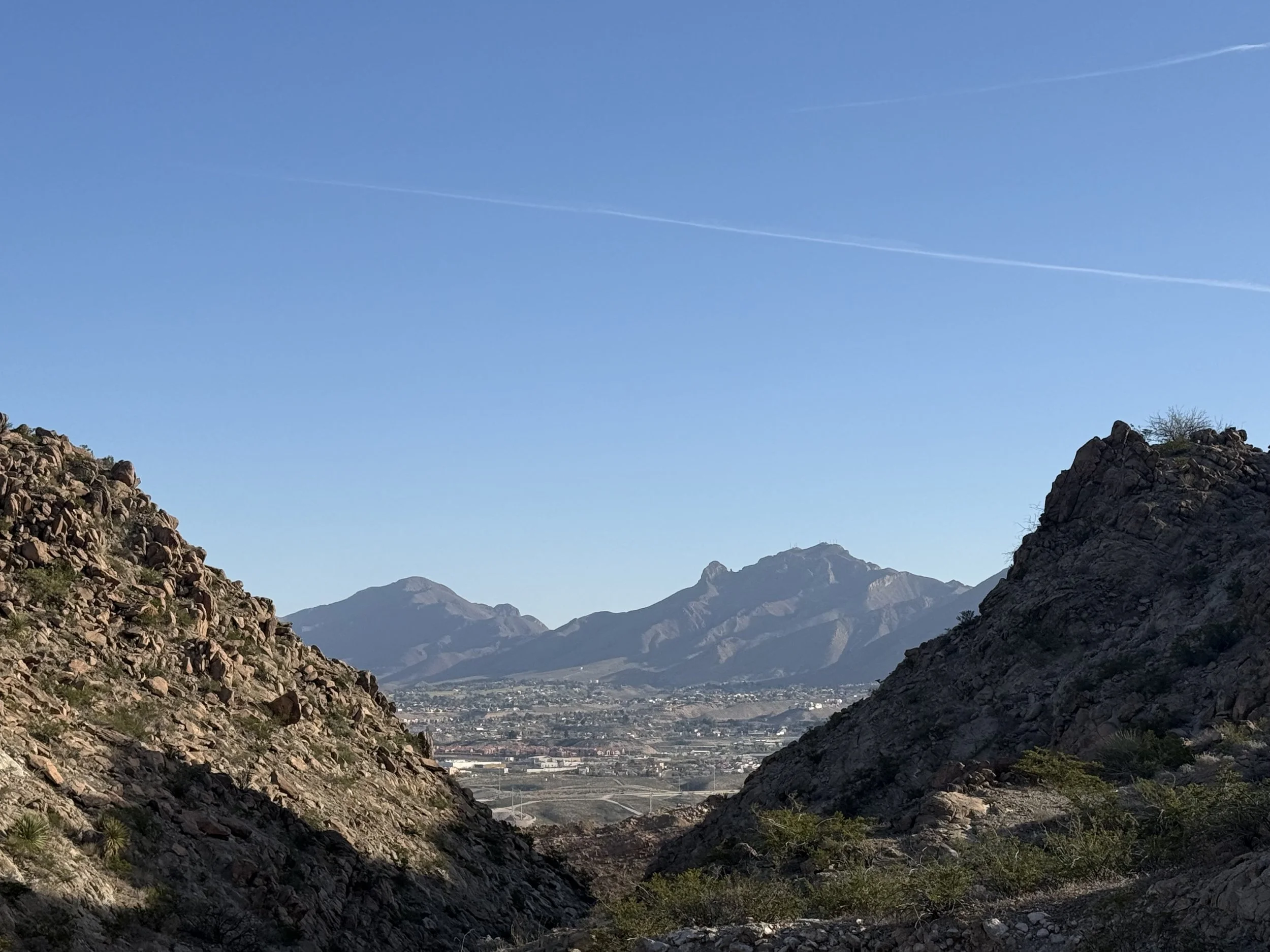
Geographically, the city of El Paso runs along the Rio Grande or Big River, and the Franklin Mountains, also called the Sierras de los Mansos, divide the city into two sections, east and west.
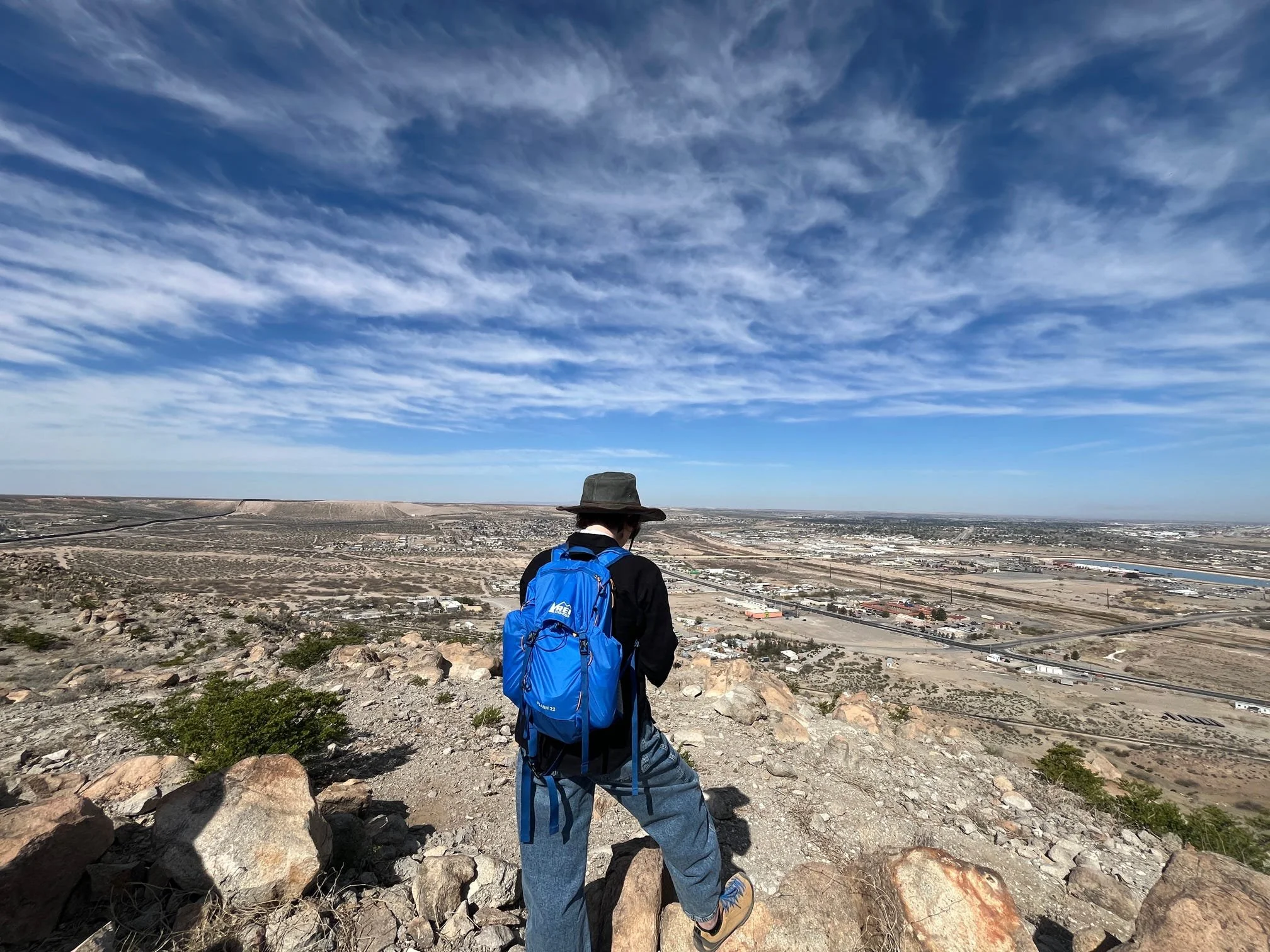
We could see this divide — The Pass — clearly from the top of Mt. Cristo Rey in New Mexico as we joined a water drop for migrants who pass through the desert, seeking a new well of life.
Our guide that day explained that El Paso, The Pass, is one of Earth’s oldest migration routes. 98 million years ago, dinosaurs used this route for seasonal migration. We’re talking Cretaceous period — think Tyrannosaurus Rex, Triceratops, Velociraptors — all passing through the rock and sand toward better climes for a season, where food and water and clean air were more abundant, where the odds of survival were greater, where they could grow their families.
Our guide was telling us about dinosaurs as we left backpacks full of provisions and water bottles in crevices just off the main trail at Mt. Cristo Rey, for migrants who somehow manage to make it through the pass, and over, under, or around the 25ft wall of steel and barbed wire that runs almost 750 miles along the border with Mexico.
I don’t know how to describe it, this wall. It’s big. It’s endless. It’s bewildering; a dark line in the desert, running from itself, chasing itself, into the horizon.
A T-Rex could probably mow down this thing, but to a mother carrying her toddler on her hip and holding the hand of her five-year-old, well, the wall is the aggressor.
After talking to immigration lawyers and border patrol, it was confirmed for us that the US is no longer processing nor granting any asylum claims right now. There is no legal way to pass, except for a select few.
Though we’ve signed international agreements guaranteeing sanctuary for those seeking protection from violence or famine, we are not honoring those agreements.
We are instead continuing to build the wall and pouring money into detention centers that are designed to manage and break bodies, to break the bodies of people who have already passed through, who are already in the process, many of whom have papers — papers that have recently been nullified, people who have homes, jobs, families, pay taxes, worship in our churches.
It’s just overwhelming and devasting.
For many years, the Rio Grande Borderlands ministry team focused on accompanying those who came through the pass or through ports of entry, but in these last months, their ministry has turned to those who are caught in the in-between — locating those lost in the belly of the detention system; procuring representation for those who can’t afford it; sheltering families who are choosing to self-deport; finding ways into facilities where people are languishing. With God’s help, they are making a way out of no way, one family, one child, one precious life a time.
We followed the Borderland ministry team for a week as they winded through the mountains and desert and along the river from El Paso to the Big Bend into Mexico and back: Chaplain Ana and Father Mike, we followed them into parish halls and shelters and municipal buildings, right up to the doors of three detention centers — as far as we could go, as close as we could get people who bear the image of God, who long for better climes, food, shelter, air, safety.
Fr. Mike wears a shirt that says Love Thy Neighbor, “the second greatest commandment,” and Ana wears a look of fierce resolve.
“Come to me, all you who are wearied and burdened and I will give you rest, food and fellowship, a pillow for your head, a way out of no way.”
“Come, all of you that are blessed by my Father, inherit the kingdom prepared for you from the foundation of the world;”
El Paso – The Pass, a place in the desert where dinosaurs once walked, now a place of roving patrols that terrorize and lock doors — and God’s disciples drop keys.
Whitney Kimball Coe is the Rural Strategies’ Vice President of National Programs, and leads Rural Strategies’ Rural Faith Initiative.